1. Understanding the Core Differences: Software vs. Calculator
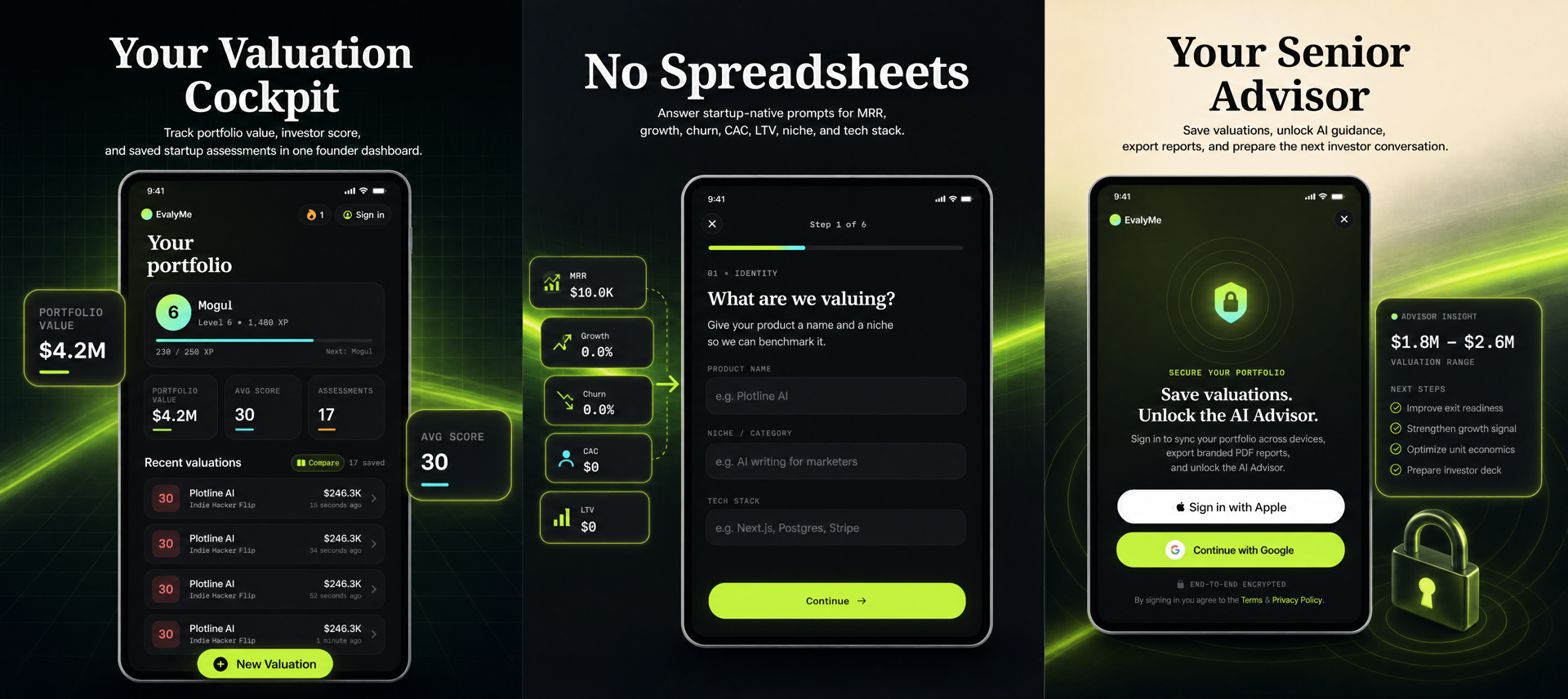
For SaaS founders and indie coders, the term “business valuation software” can mean anything from a browser-based calculator to a complex, full-featured SaaS platform. The practical distinction is in depth, workflow, and intended use. Browser calculators, such as EvalyMe’s free SaaS valuation calculator, provide an instant, directional estimate based on a handful of operating metrics you supply. These tools are designed for speed and scenario planning, not for formal diligence or compliance.
In contrast, dedicated valuation software often includes features for document management, scenario modeling, workflow collaboration, and sometimes even integrations with accounting or billing platforms. These tools may support multiple valuation methodologies (income, market, asset-based) and can generate detailed reports for investors or buyers. However, they require more setup, data hygiene, and founder time.
For most bootstrapped SaaS teams, the browser calculator is a first step: it helps clarify which signals matter and what your current operating metrics suggest about value. Full-featured software becomes relevant when you need to track changes over time, share detailed reports, or prepare for external scrutiny. The choice depends on your current goals and the evidence you need to gather.
2. When a Browser-Based Calculator Is Sufficient
If you’re seeking a quick, scenario-driven estimate to guide your next quarter or to sanity-check your operating assumptions, a browser-based calculator is typically enough. Tools like EvalyMe’s calculator ask for key SaaS metrics—monthly recurring revenue (MRR), churn, growth, LTV/CAC, active users, and company age—and return a heuristic valuation range plus a weighted operating score. This lets you compare your own business against past versions of itself or against similar cohorts, rather than relying on hard-coded market multiples.
The calculator is especially useful for:
- Early-stage founders with limited financial history
- Indie coders validating whether their side project is on a viable path
- Teams preparing for a future exit but not yet in formal diligence
- Scenario planning (e.g., “what if I cut churn in half?”)
However, calculators do not audit your data, ingest contracts, or supply verified industry benchmarks. The output is a planning tool, not a formal appraisal or investment offer. If you need a directional estimate to decide where to focus your next 30 days, a calculator is the right fit. For a deeper dive, see What a SaaS Valuation Calculator Can—and Cannot—Tell You.
3. When Full-Featured Valuation Software Is Necessary
There are situations where browser calculators are not enough. If you’re preparing for a formal acquisition, raising a significant funding round, or need to satisfy legal or compliance requirements, you’ll likely need full-featured valuation software. These platforms typically support:
- Document uploads and audit trails
- Multi-methodology analysis (e.g., DCF, market comps)
- Collaboration with accountants, lawyers, or investors
- Custom scenario modeling
- Integration with financial systems for data accuracy
For example, if a buyer requests a defensible report showing how your valuation was derived, including supporting documents and sensitivity analysis, a calculator’s output will not be sufficient. Similarly, if you need to track changes in value over time and share progress with stakeholders, a workspace-based software solution is more appropriate.
However, these tools come with tradeoffs: more complexity, higher costs, and a steeper learning curve. For most indie SaaS teams, the investment only makes sense when a transaction or formal process is imminent.
4. Practical Diagnostic: Which Tool Do You Need?
To decide between a calculator and valuation software, use this checklist:
- Are you seeking a quick estimate for internal planning or a formal report for external parties?
- Do you need to track valuation over time and share progress with a team?
- Will you need to upload supporting documents or integrate with accounting systems?
- Is your business at a stage where buyers, investors, or accountants will scrutinize your inputs?
- Are you comparing scenarios or preparing for a specific transaction?
If your answers lean toward internal use, scenario planning, and speed, start with a browser-based calculator. If you need audit trails, document management, or formal reporting, consider full-featured software. For most bootstrapped SaaS teams, the calculator is the default starting point.
5. Worked Example: Using a Calculator for a SaaS Side Project
Suppose you’re an indie coder with a SaaS app generating $2,000 in MRR, 5% monthly churn, 8% monthly growth, LTV of $600, CAC of $120, 300 active users, and 14 months in market. Plugging these into the EvalyMe calculator, you receive:
- A heuristic valuation range (e.g., $120,000–$180,000, illustrative only)
- A six-factor operating score highlighting revenue strength, retention, growth, and unit economics
- A breakdown of which signals are helping or hurting the estimate
You notice that churn is the weakest signal. The calculator suggests focusing on retention for the next 30 days. This output is not a buyer’s offer, nor does it audit your contracts, but it helps you decide where to invest effort. If you later need to document historical improvements or prepare a formal report, you can export your baseline and consider upgrading to a workspace or software solution.
6. Limits, Blind Spots, and Common False Reads
Both calculators and valuation software have limits. Calculators rely on founder-supplied metrics and cannot verify their accuracy. They do not account for strategic fit, buyer negotiation, or off-balance-sheet risks. The valuation range is a heuristic, not a guarantee or prediction of what a buyer will pay. For example, the EvalyMe methodology explicitly states that the model does not ingest private acquisition data or live market comps.
Full-featured software can still give misleading results if inputs are optimistic or if the chosen methodology doesn’t fit your business model. Neither tool replaces buyer diligence, legal review, or negotiation. A common false read is assuming that a high operating score or a calculator’s range guarantees a specific exit price. Always treat outputs as directional, not definitive.
7. Concrete Founder Actions for Each Stage
- Early validation: Use a browser calculator to establish a baseline and identify weak signals. Focus on improving the lowest-scoring factor (e.g., churn, growth, LTV/CAC).
- Scenario planning: Change one input at a time in the calculator to see how it moves the range. Use this to prioritize product or marketing work.
- Preparing for diligence: If you expect buyer or investor scrutiny, start documenting your metrics, contracts, and processes. Consider moving to a workspace or software solution that supports audit trails and report exports.
- Formal process: When a transaction is likely, use full-featured software to generate detailed reports, track changes, and collaborate with advisors.
At every stage, verify your assumptions and avoid overstating your value. For more on practical steps, see How to Use a SaaS Business Valuation Calculator: A Practical Guide for Founders.
8. Contextual CTA and Methodology Reference
If you’re a SaaS founder or indie coder looking for a fast, transparent way to pressure-test your business’s value, try the EvalyMe SaaS Valuation Calculator. No signup is required for a baseline estimate; your metrics stay in your browser unless you choose to save them. The calculator gives you a six-factor operating score and a heuristic valuation range, helping you decide where to focus next.
For teams needing ongoing tracking, task management, and AI-guided exit playbooks, EvalyMe Pro offers a private workspace and mobile apps. Before relying on any output, review the published methodology to understand how the estimate is produced and where its limits lie. Use the calculator as a scenario tool, not as a substitute for buyer diligence or a formal appraisal.